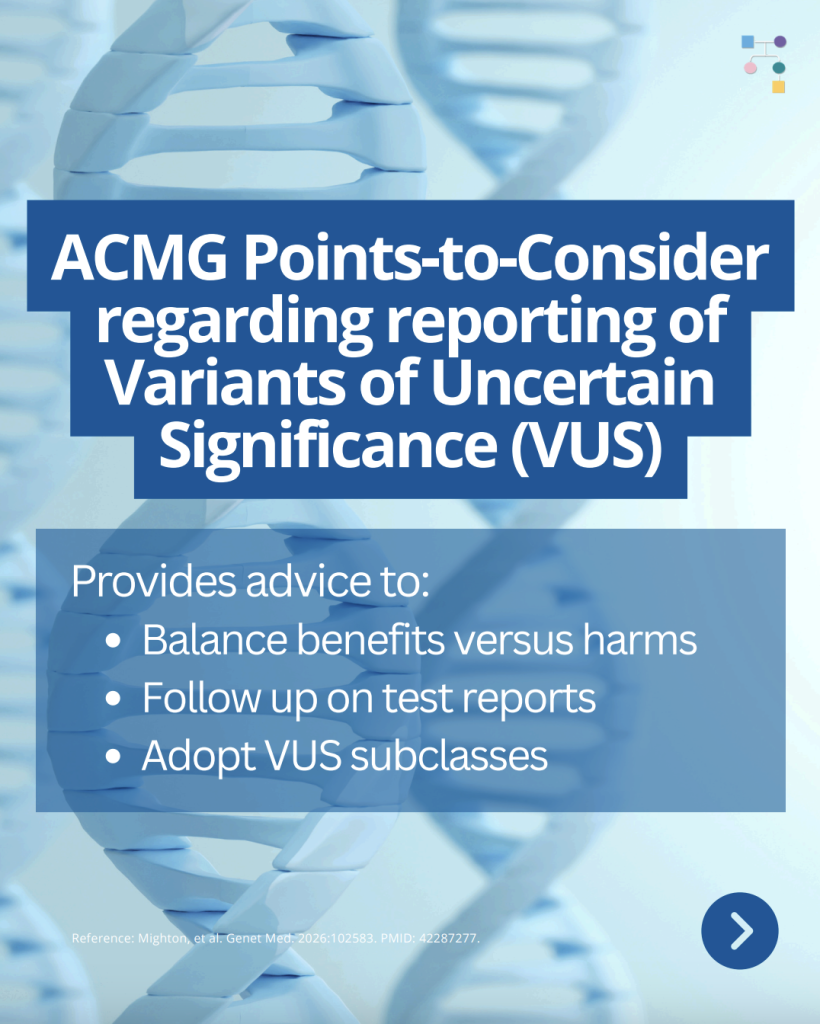
A new ACMG Points-to-Consider article provides advice for clinicians and genetic testing labs regarding reporting of Variants of Uncertain Significance (VUS) to:
- Better balance the potential benefits and harms of reporting such variants
- Offer suggestions for following up on genetic test reports
- Consider adopting VUS subclasses and updating reports when variant classifications change.
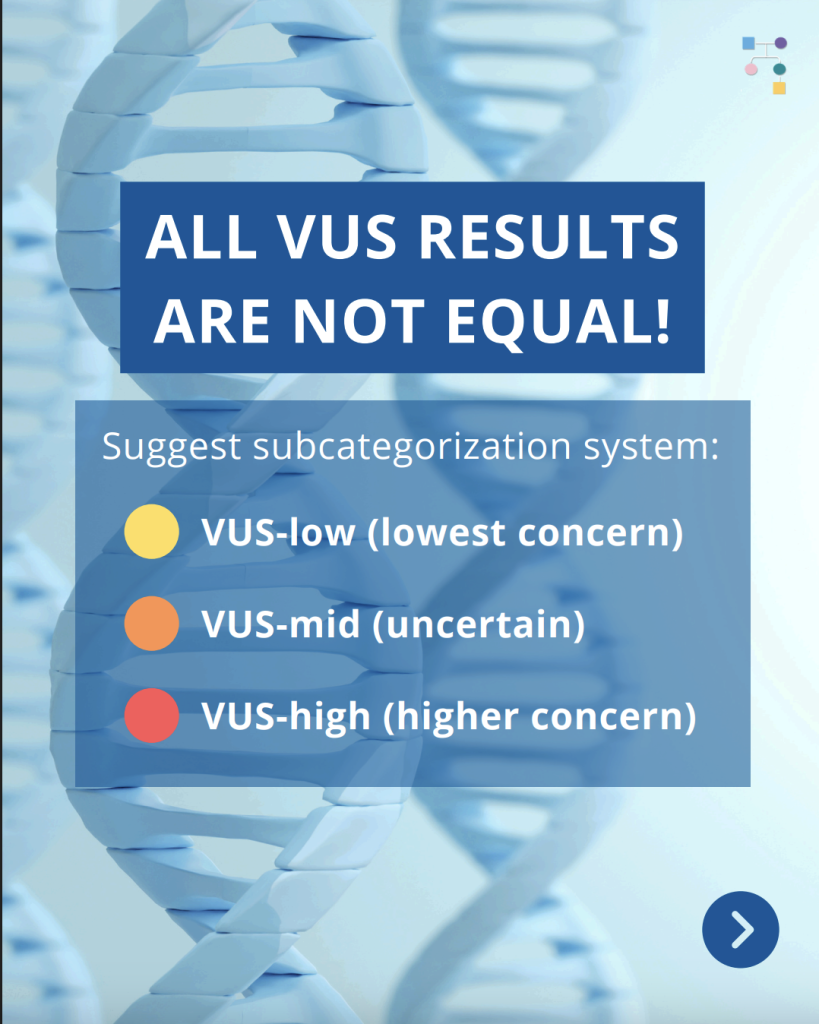
All VUS results are not equal! Thus, suggest subcategorization system:
- VUS-low (lowest concern)
- VUS-mid (uncertain)
- VUS-high (higher concern)
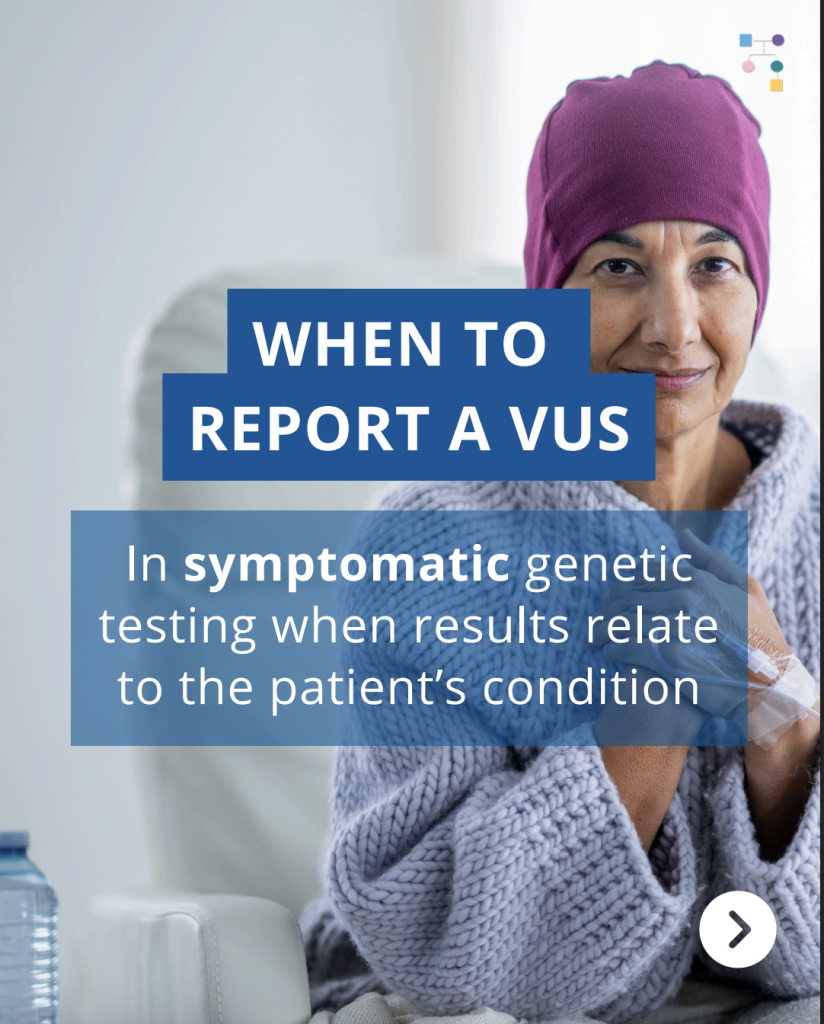
When to report a VUS:
- In symptomatic genetic testing when results relate to the patient’s condition
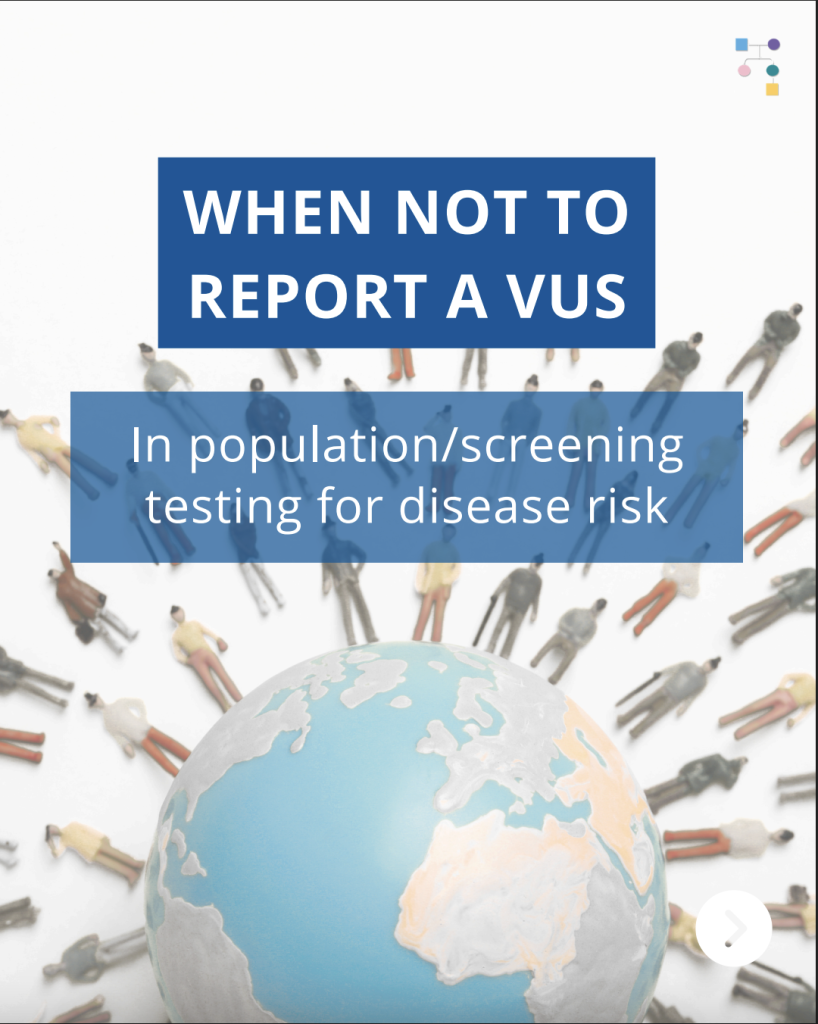
When NOT to report a VUS:
- In population/screening testing for disease risk
Why does this matter?
- Over 90% of clinicians, genetic counselors, lab directors, AND patients surveyed agree: clearer reporting helps guide better follow-up care
- Helps labs prioritize which variants are most likely to explain a patient’s symptoms
- Reduces unnecessary follow-up on unlikely findings
Coming soon:
- Updated sequence variant classification standards (SVC v4.0) mid-2026 will make this approach standard across all genetic testing labs.
- These recommendations put patients first—ensuring results are clear, actionable, and personalized to individual cases.
Learn more at: https://www.sciencedirect.com/science/article/pii/S1098360026009019?dgcid=coauthor
Reference: Mighton, et al. Genet Med. 2026:102583. PMID: 42287277.
Through ICARE, we aspire to share cancer-related information that may be of interest. If you have questions or clarifications, please direct them to your healthcare provider.